UV resistance
#1
Of the additives tested, nano-silica resisted UV aging the best — and UV is the #1 force baking the oils out of a roof. Qian et al., Materials (2020)
Your roof is wearing out right now.
Every single day, the sun is baking the life out of your shingles — even if they look perfectly fine from the street, and it's been happening since the day they went on. Here's what no one tells you: you don't have to wait for the leak and the $10,000 surprise. You can get ahead of it and protect the roof you already have.
Let's be straight with you
Think about it. You change your oil. You service the furnace. You get your teeth cleaned twice a year. But your roof — the single most expensive thing protecting everything you own — you just leave it up there to bake in the sun, untouched, until one day someone climbs down, shakes their head, and hands you a number with a lot of zeros in it.
That's not your fault. For decades there was nothing you could do — you let the roof go until it failed, then you wrote the check for a new one. Neglect-and-replace was the only option anyone ever gave you. It isn't anymore.
So we're not here to sell you a new roof. We're going to show you how your roof actually works, what's quietly happening to it right now, and why a growing number of homeowners are choosing to get ahead of it instead of waiting for the bill. Fair enough?
The problem
And it starts the day it's installed — even if yours looks perfectly fine from the street. Almost no one explains what's actually happening above your head, so here's the truth, starting with what a shingle even is.
A shingle is a fiberglass mat soaked in asphalt, topped with mineral granules, and glued down by a sealant strip.
The whole game comes down to two of those layers: the oils inside the asphalt, which keep it flexible and waterproof — and the granules on top, which are its sunscreen. Lose those two, and everything else falls apart. Here's how it happens.
Every day it's up there, your roof is under attack from six directions.
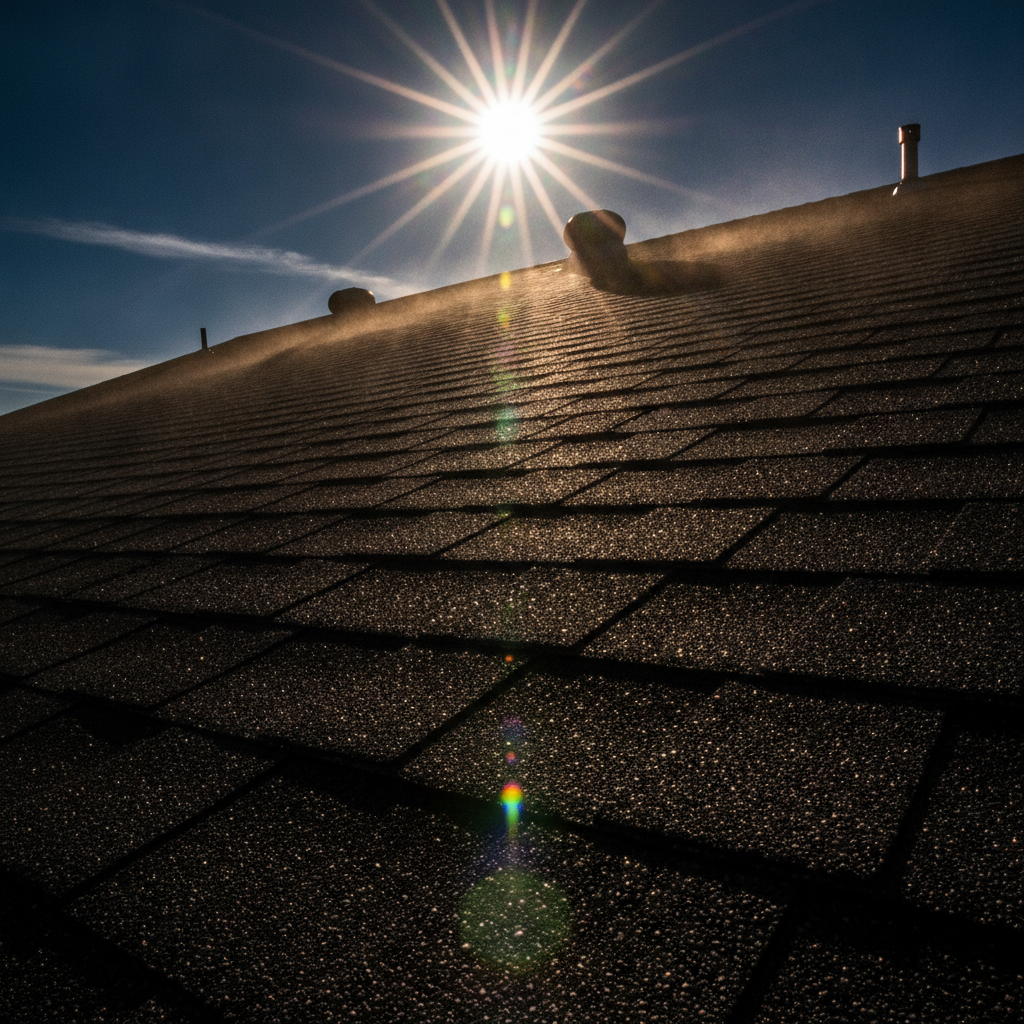
Sunlight is energetic enough to break the chemical bonds in your asphalt, slowly converting and evaporating the light oils that keep shingles flexible. And a roof routinely hits 150–180°F, which speeds the whole process up. This is the root cause — everything below just exploits the damage the sun starts.
The tell: faded color, a dry chalky surface, and shingles that feel stiff and brittle instead of pliable.
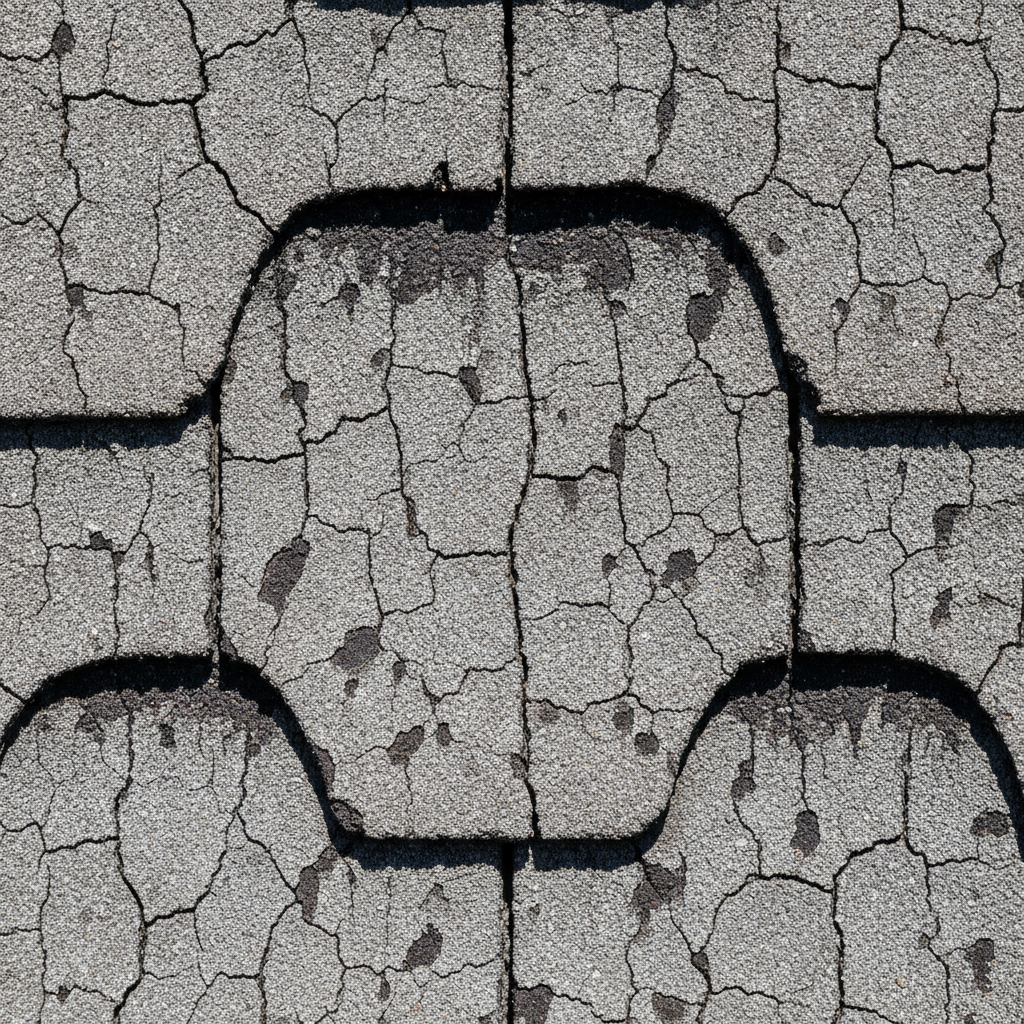
Your roof swells in the day's heat and shrinks every night. A young, oily shingle flexes with it. A dried-out one can't — so thousands of cycles fatigue it until it cracks, splits, and curls. Dark shingles and a hot, poorly-vented attic make it worse.
The tell: cracking, curling edges, and shingles "clawing" up at the corners.
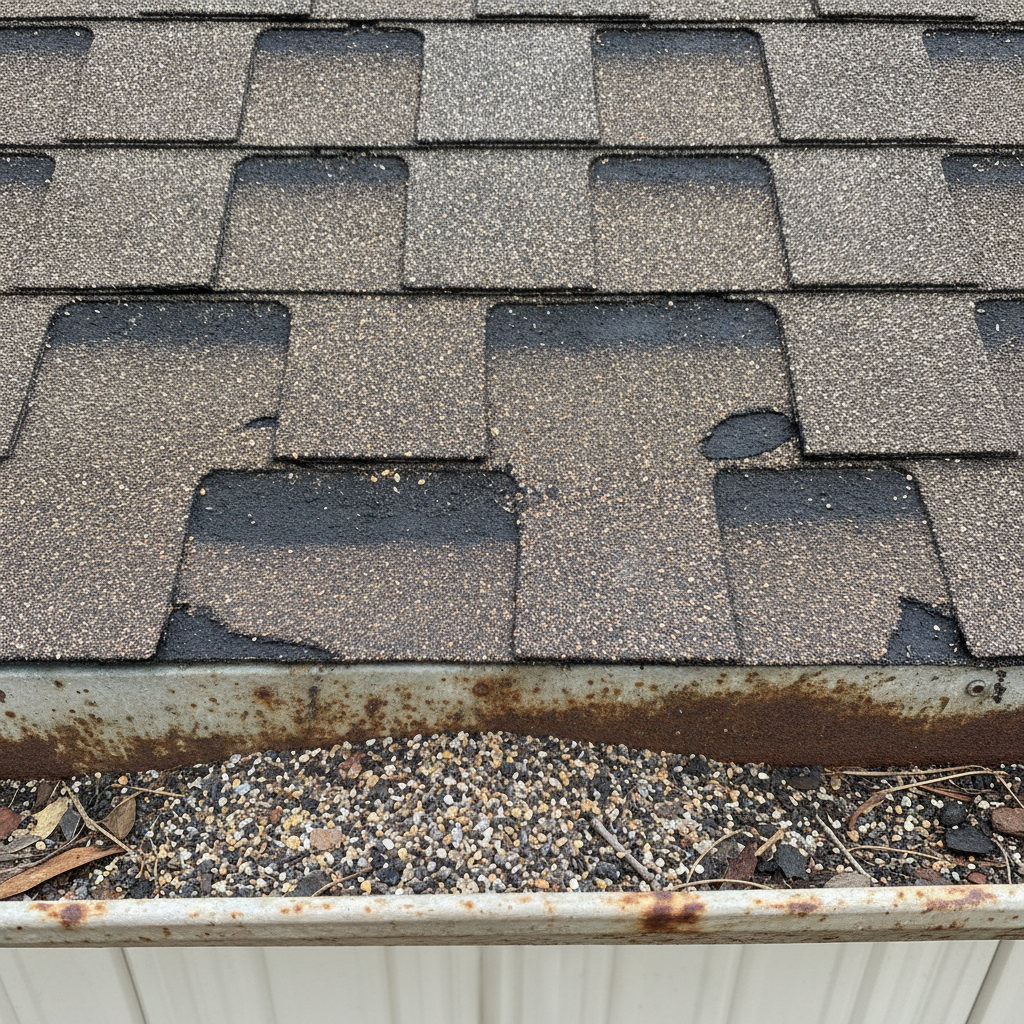
Granules are held on by the asphalt. As the binder dries and hardens, it loses its grip and granules wash off. Every bald spot exposes raw asphalt to even more UV — which loosens the next granules. It snowballs: lose half your granules and you can lose up to ~70% of the roof's remaining life.
The tell: sandy grit in your gutters and at the downspouts, and darker bald patches across the shingles.
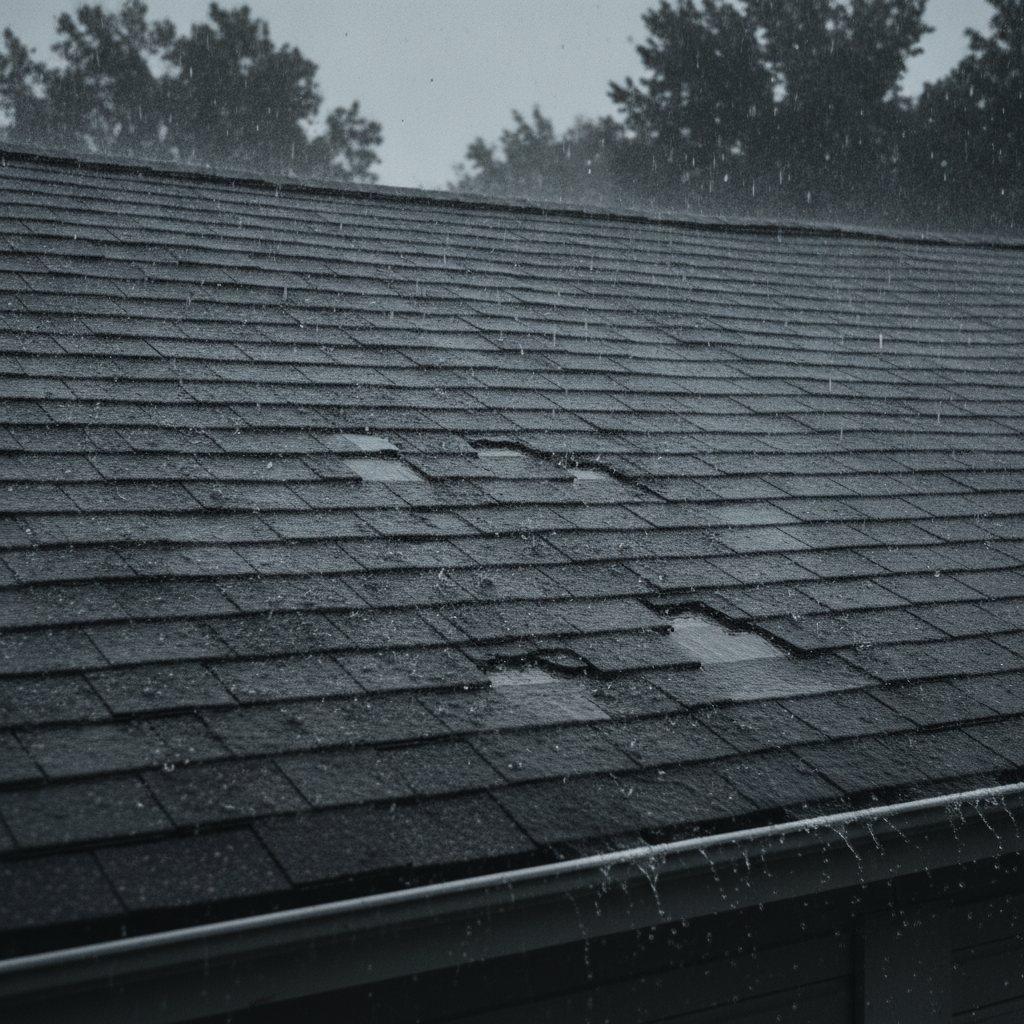
A healthy shingle sheds rain. A dried, cracked one absorbs it — swelling, blistering, and wicking moisture into the mat and down to the wood deck. Water rarely starts the damage; it exploits the openings drying already made.
The tell: dark stains, blisters, soft spots, and the first attic or ceiling leaks.
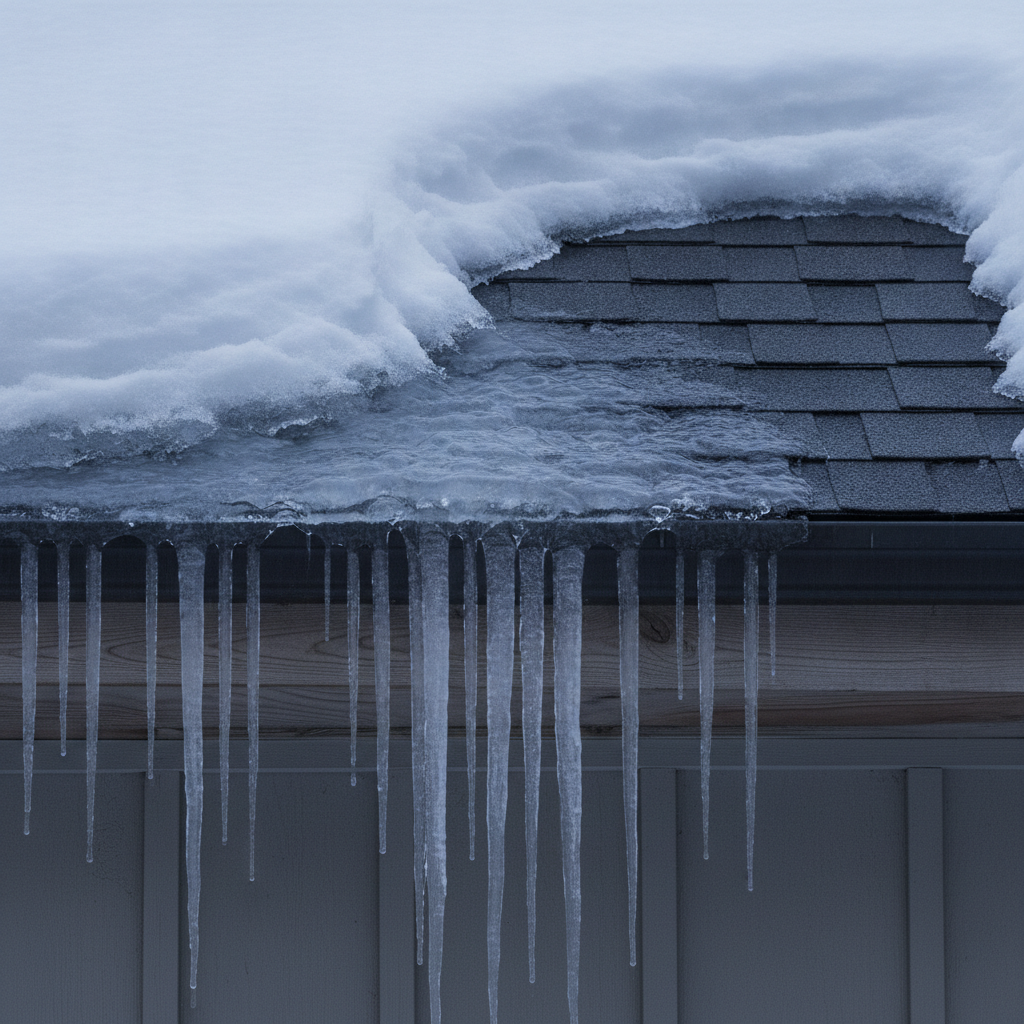
Water trapped in cracks freezes and expands about 9% — prying every crack wider and popping more granules, over and over. Ice dams at the eaves back water up under the shingles and into the home. It's the same force that turns a small road crack into a pothole.
The tell: widening cracks, ice ridges and icicles at the eaves, and leaks that show up in winter.
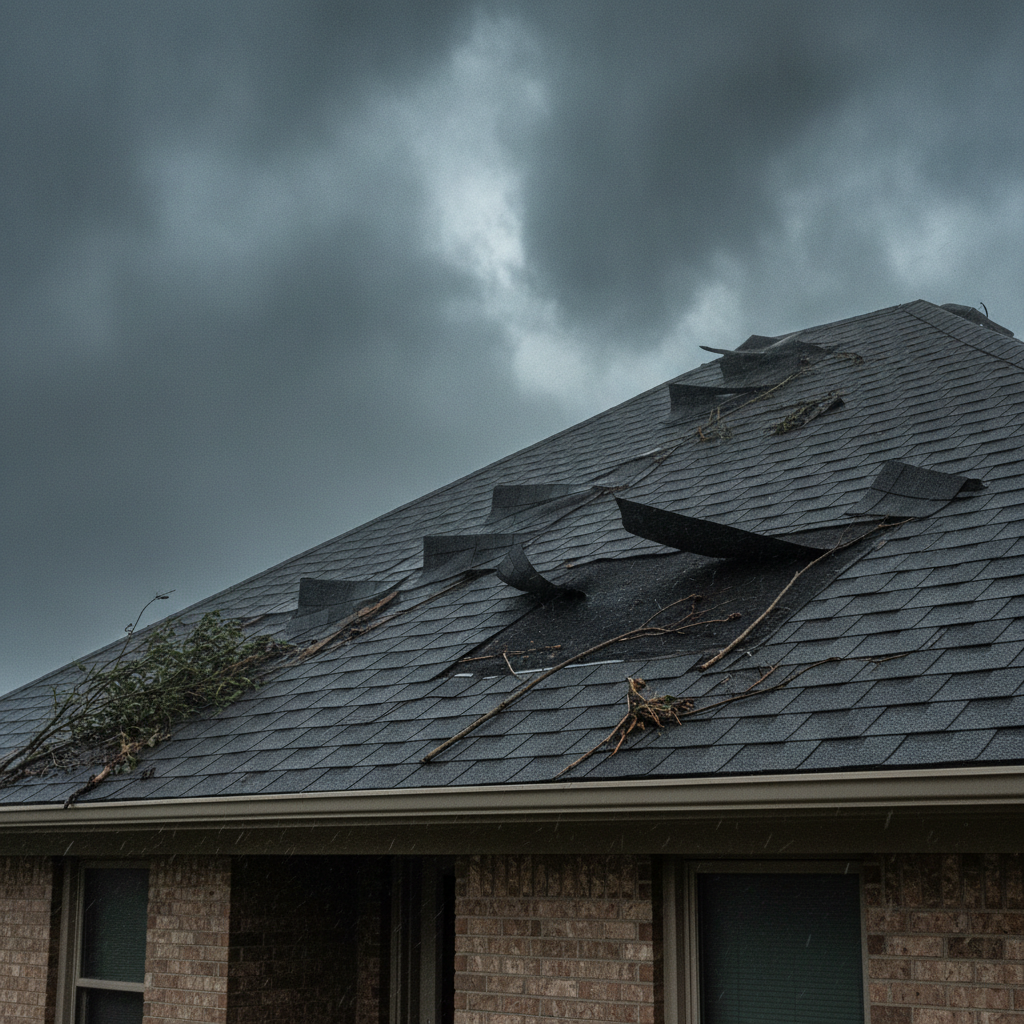
Wind doesn't tear off a healthy, sealed shingle — it lifts a brittle, unsealed one. As the sealant strip ages and lets go, even a partly-lifted tab catches wind like a sail and the force multiplies until it tears at the nails. The older and drier the roof, the less wind it takes.
The tell: lifted or curled tabs, shingles missing after a storm, and debris in the yard.
Closer to home
The Wasatch Front sits 4,000–5,000 ft up, where thinner air lets through roughly 15–20% more UV than at sea level. UV is the oil-baking engine — so our roofs dry out faster.
Clear, dry skies mean blazing days and cold nights — 30°F+ swings that fatigue shingles — plus hard freeze-thaw winters working every crack.
Add it up and a typical asphalt roof here lasts about 12–18 years — several years short of the national average.
It's not that the dry air pulls the oil out — it's that Utah's high, dry, clear-sky climate hits your roof with more UV and bigger temperature swings than almost anywhere in the country.
The bigger problem
Typical cost to fully replace an asphalt shingle roof today — more on larger or premium homes.
For most families, it's one of the largest unplanned bills they'll ever face.
The solution
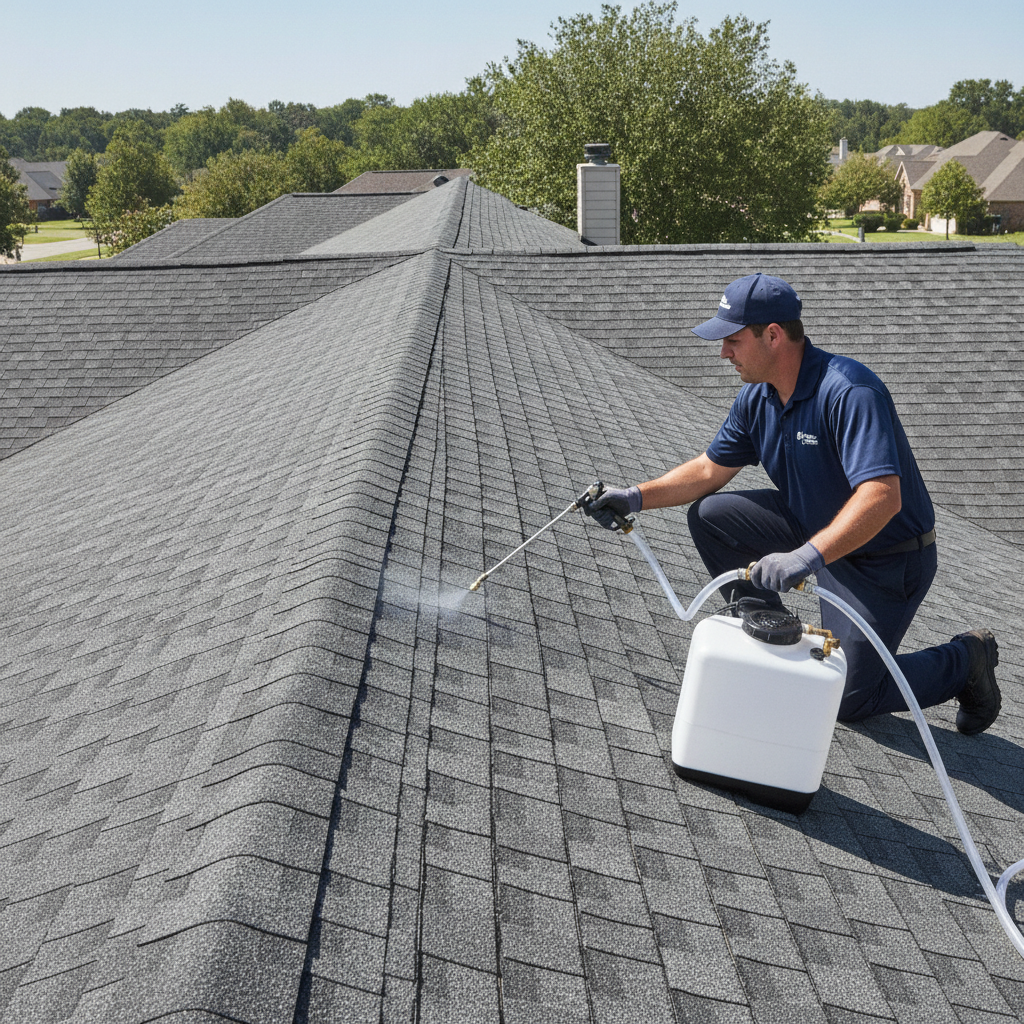
You don't have to wait for your roof to fail and then replace it. If the problem is that your shingles are drying out, the fix is simple — put the oils back before they're gone, and protect them so they don't dry out again. Whether your roof is nearly new or well into its life, that's exactly what Vive does. It's maintenance for the roof you already have.
How Vive works
First it restores the shingles you already have. Then it protects them — four ways.
A plant-based bio-oil soaks deep into the shingle and replenishes the natural oils the sun baked out — restoring the flexibility and water resistance your roof had when it was new.
Not a coating sitting on top. A restoration from the inside out.
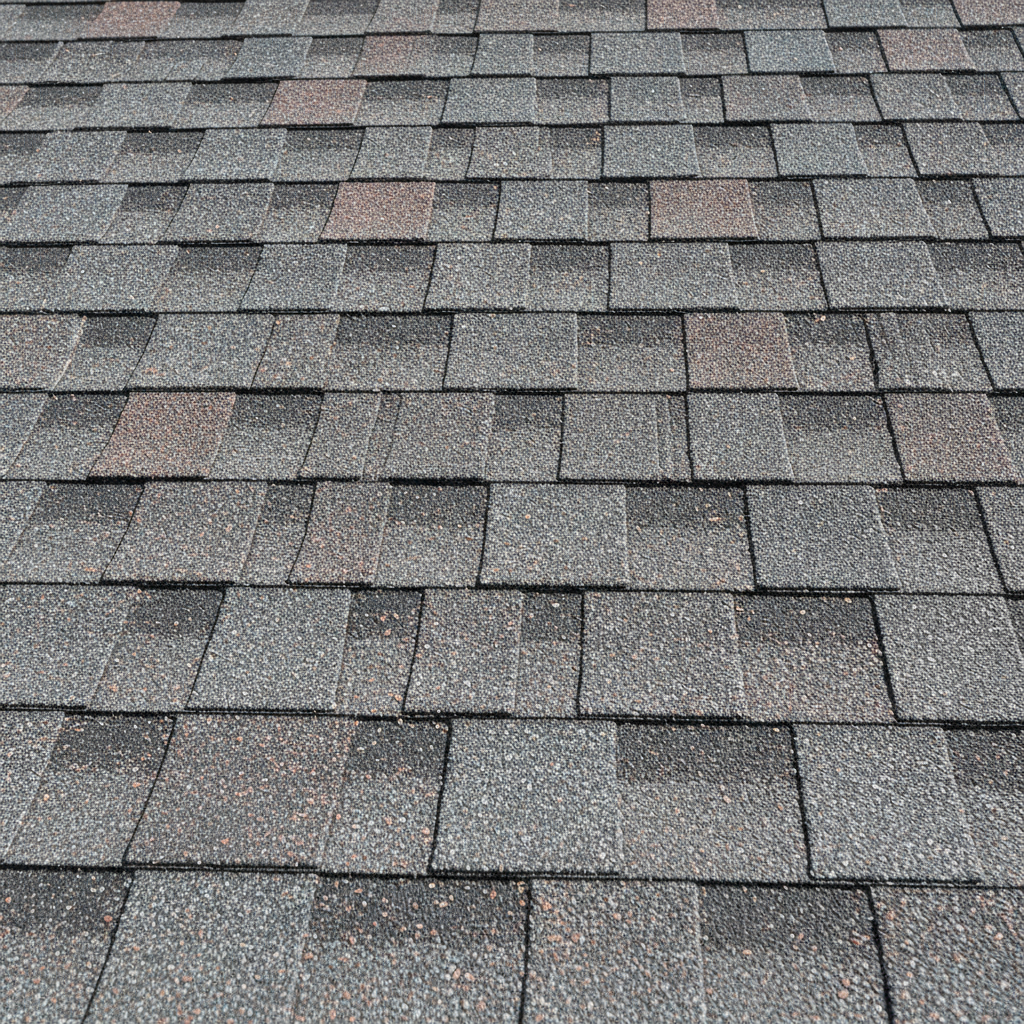 Before
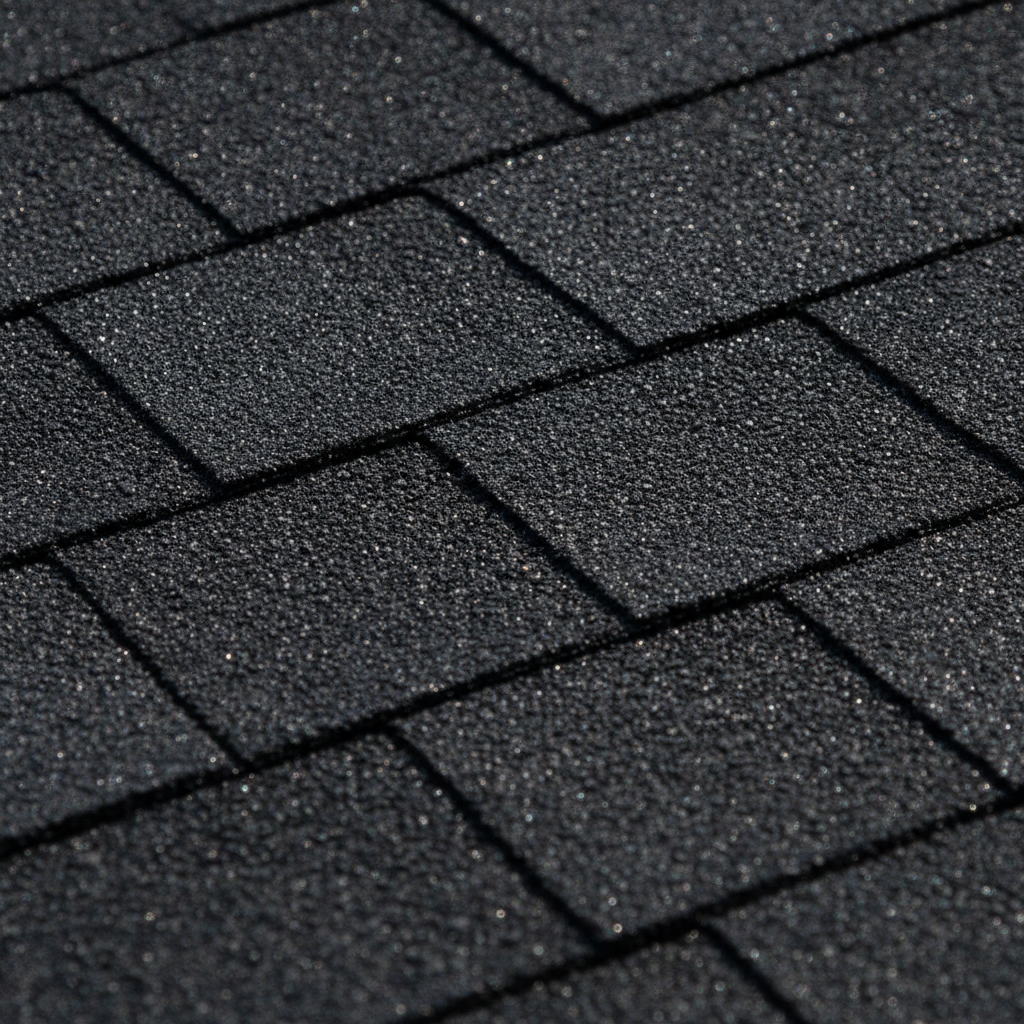 After Vive
Step 2 — Protect
A nano-silica layer bonds to the surface and defends against everything that wears a roof down — built on the science independent labs have studied for years.
The sun is what dried your roof out in the first place. Vive's nano layer resists UV so the oils we just restored don't bake right back out. It's sunscreen for your shingles.
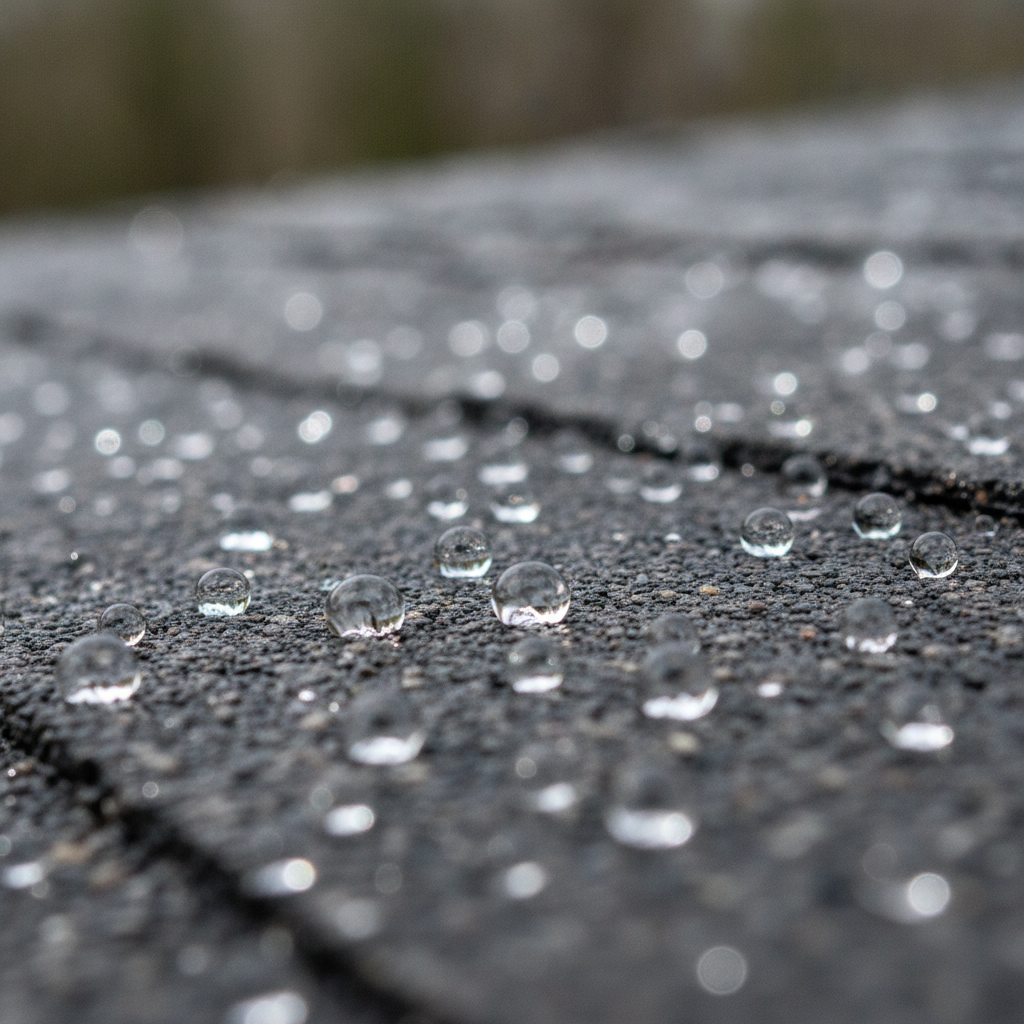
Water is what destroys a roof. Vive makes the surface hydrophobic — rain beads up and sheds instead of soaking in, and snow and ice release more easily. Less water intrusion, less freeze-thaw damage.
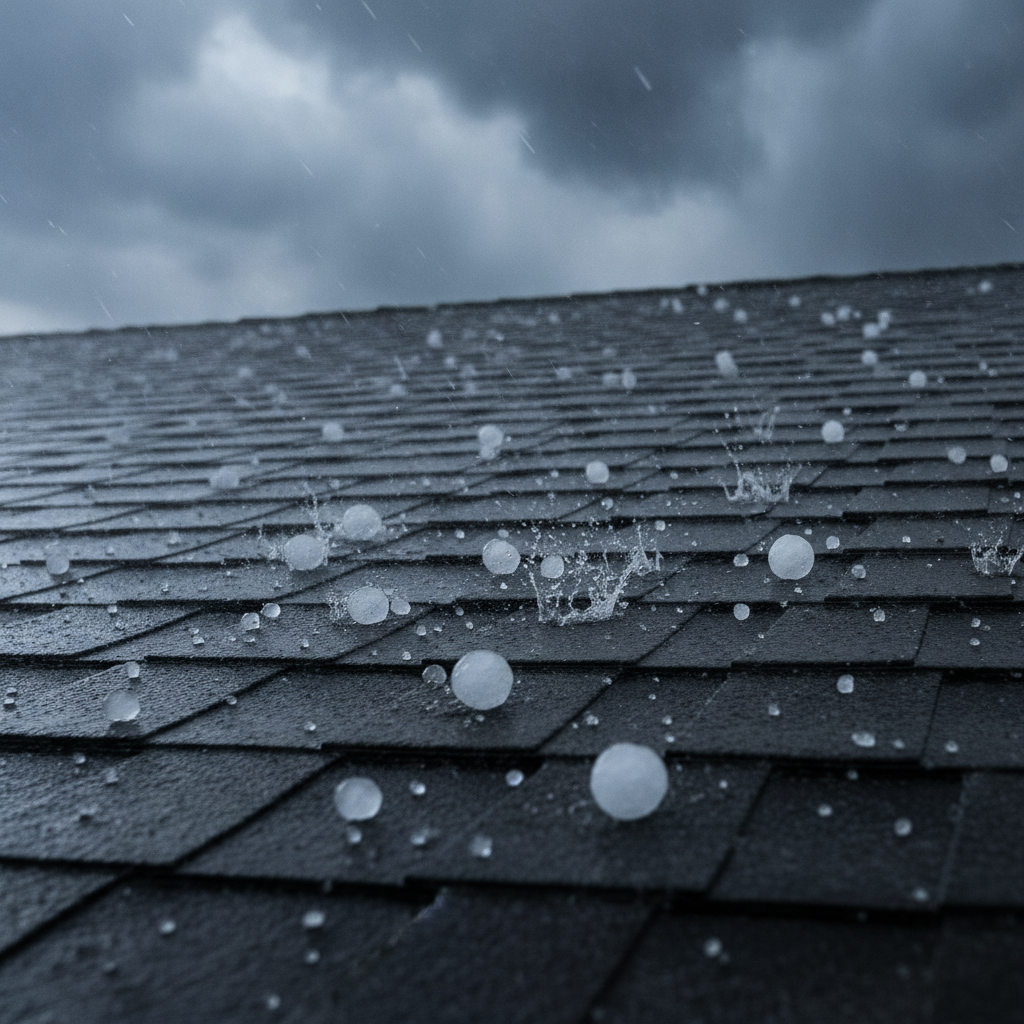
Restored, flexible shingles flex and absorb a hit instead of cracking — and independent studies on nano-silica show a tougher, more impact-resistant surface.
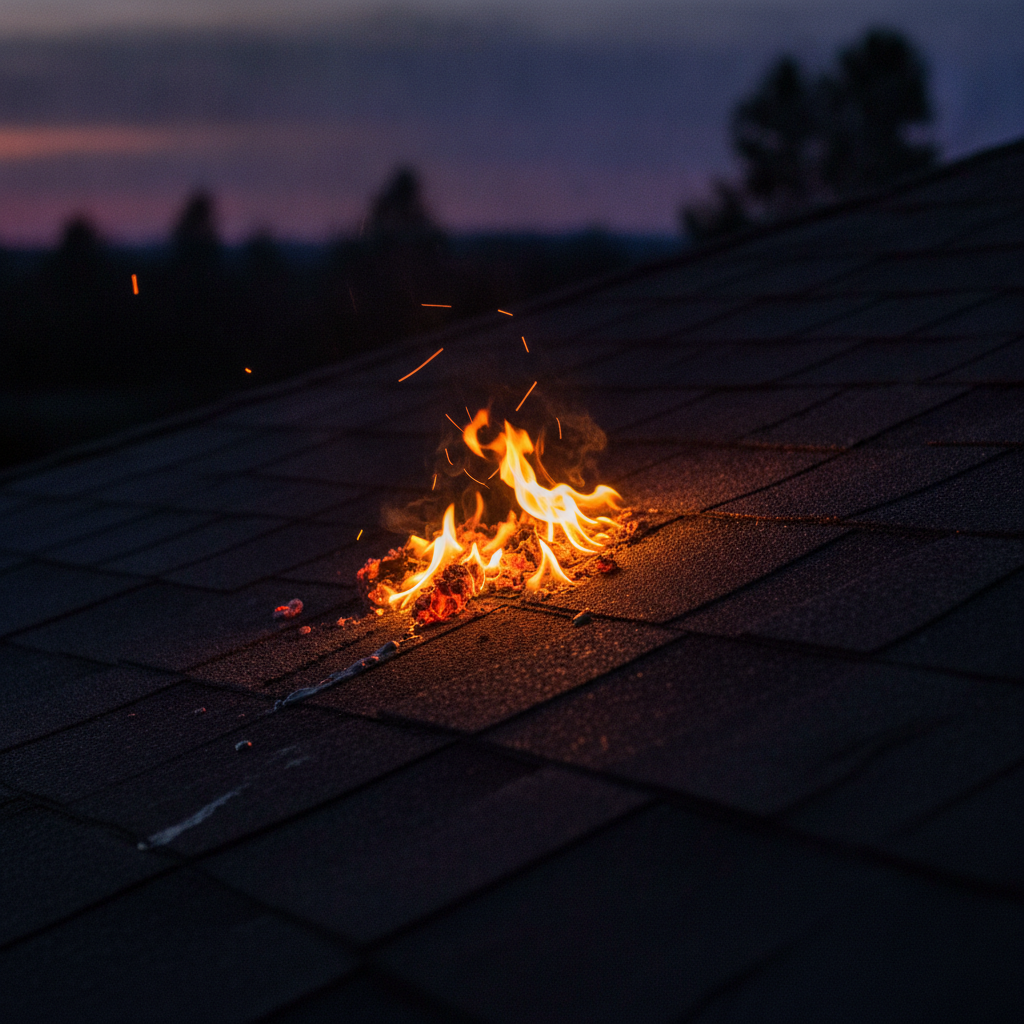
In wildfire country, your roof is your first line of defense. The nano-silica shield adds a layer of fire resistance to the shingle surface.
Ready to see where your roof stands? Get your free 0–100 roof score.
Get my free roof scoreThe proof
"Does it actually work?" is exactly the question you should be asking. Your shingles are asphalt — one of the most-studied materials on earth — and nano-silica is one of the most-researched ways to protect it. We didn't run these tests; independent, peer-reviewed labs did. Here's what they found.
Of the additives tested, nano-silica resisted UV aging the best — and UV is the #1 force baking the oils out of a roof. Qian et al., Materials (2020)
Water beads into balls and rolls off instead of soaking in — the mark of a "superhydrophobic" surface (a fresh shingle sits near 90°). ACS Omega review (2025)
Up to 82% less deformation under load — a harder, more durable binder that resists rutting and wear. Albayati et al., Materials (2024)
In lab testing, treated asphalt lasted up to ~2.8× as many fatigue cycles before failing. Construction & Building Materials review (2025)
Findings on nano-silica in asphalt & bitumen generally — independent, peer-reviewed studies, shown as evidence for the science the treatment is built on, not guaranteed outcomes for a specific roof.
We didn't grade our own homework — the research did.
Why Vive
Every other roofer makes their money replacing your roof. We make ours keeping it alive — which is exactly why we can do everything below.
Roof protection normally runs a premium. Ours is priced well below the going rate — not because we cut corners, but because we're out to be Utah's #1 roof-protection company, and the fastest way there is getting more roofs protected. You get premium work at a below-market price; we get the opportunity to earn a customer for life.

If your roof fails within 10 years of your first spray and needs replacing, every dollar you paid us comes straight off the price of your new roof. Read that again: you cannot lose money protecting your roof with us. Worst case, it was a down payment on the roof you'd have bought anyway.
We run our own in-house maintenance & repair division. Anything your roof ever needs while you're a customer, we come out and fix it at our cost — no upcharge, no marked-up invoice. It's full roof care, one company, for the life of your roof.

Your first spray is our regular price; your second is a flat $500 around year 10, giving you roughly 20 years of protection. And it's yours, not the house's — if you move, we'll come spray your new home instead.
The process
We inspect your shingles by hand and pull a satellite & sun-wear report to score your roof 0–100 — so you know exactly where it stands.
If your roof qualifies, our certified crew applies the treatment in about a day. No tear-off, no dumpster, no moving out.
Your shingles are restored and shielded — extending the life of your roof for a fraction of what replacement would cost.
Your roof score
About half the roofs we look at are a great fit. The other half are either too new to need it — or too far gone, and replacement is the honest answer. The only way to know which category yours is in is to score it.
Free, no obligation, no pressure — we’ll come score your roof and show you where it stands.
Questions
Yes. Vive uses a bio-oil to restore the natural oils the sun bakes out of your shingles, plus a nano-silica layer that shields them going forward. It's built on independent, peer-reviewed research into nano-silica — restoring and protecting what you already have, not a temporary coating.
No — and we're upfront about that. Vive is for roofs that are aging but still structurally sound. If a roof is already failing, replacement is the honest answer. That's exactly why we score every roof first, for free, before recommending anything.
Not at all. There's no tear-off and no dumpster. Our certified crew typically completes the application in about a day, and you don't need to leave your home.
A small fraction of what a full replacement would cost. Exact pricing depends on your roof, which is why we start with a free score — no obligation, no pressure.
A well-maintained roof is a selling point — it protects your equity, helps with insurance, and shows buyers the home has been cared for.
Get your free 0–100 roof score and see if Vive can add years to your roof — before you spend tens of thousands replacing it.
Get my free roof score